

Order Blocks (OB) Explained: Definition, Types & Strategy
An order block is a supply or demand zone formed before a strong price move. Learn what order blocks are, how to find them, and how to trade them.

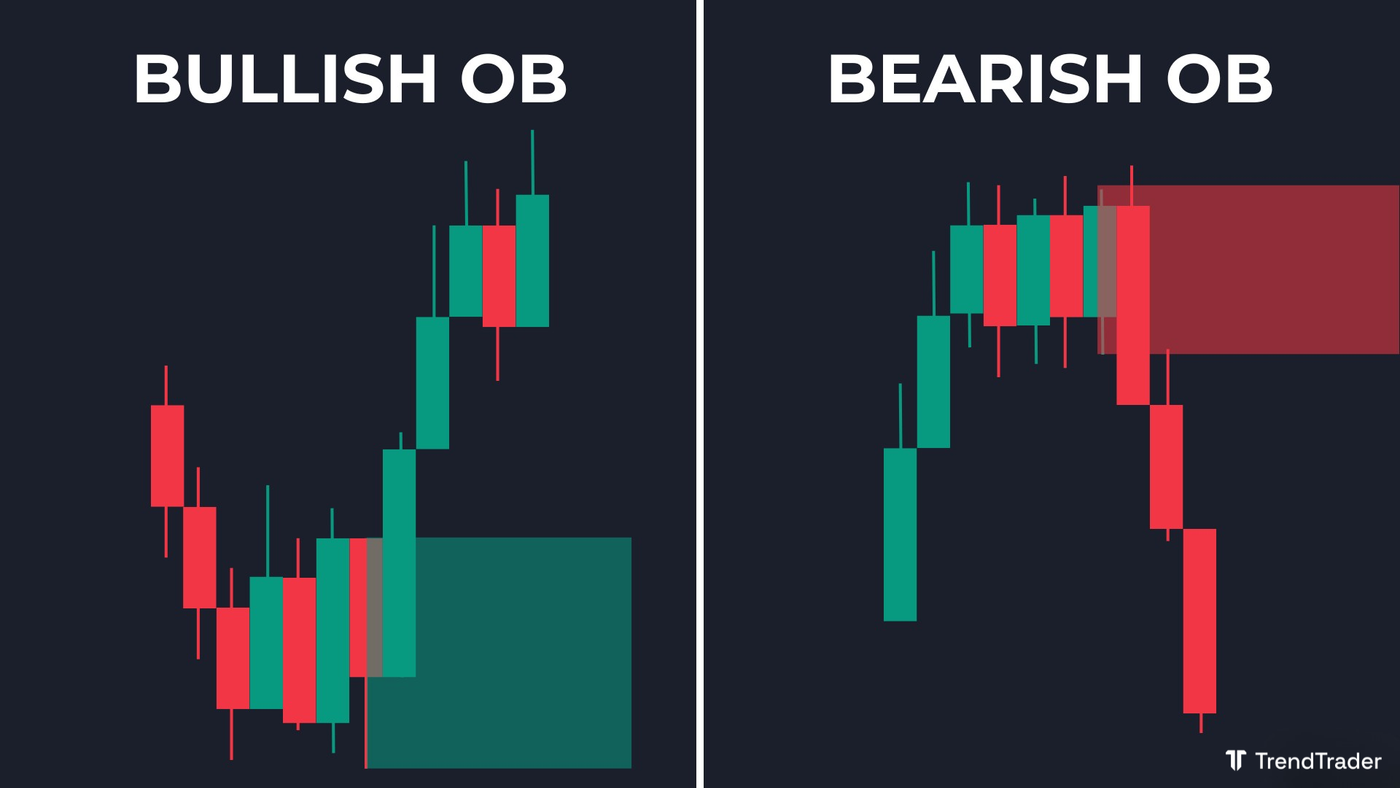
An order block (OB) is a supply or demand zone on a price chart, formed just before a strong directional move. It marks an area where a significant number of buy or sell orders were placed, typically by institutional participants. When price returns to that zone, it often reacts because unfilled orders remain.
Order blocks are a core concept in Smart Money Concepts (SMC) and ICT-based price action trading. This article covers what they are, how to find them, how to trade them, and what separates a strong order block from a weak one.
What Are Order Blocks (OB)?
An order block is a zone where limit orders from large market participants caused a notable price reaction. A bullish order block indicates a concentration of buy orders. A bearish order block indicates a concentration of sell orders.
The logic: institutional traders cannot fill large positions in a single candle without moving the market against themselves. They place limit orders at specific price levels instead. When price returns to those levels, the remaining unfilled orders absorb incoming supply or demand and push price back in the original direction.
When an order block is later invalidated by price closing through it, it converts into a breaker block, a zone that now plays the opposite role.
How to Find an Order Block
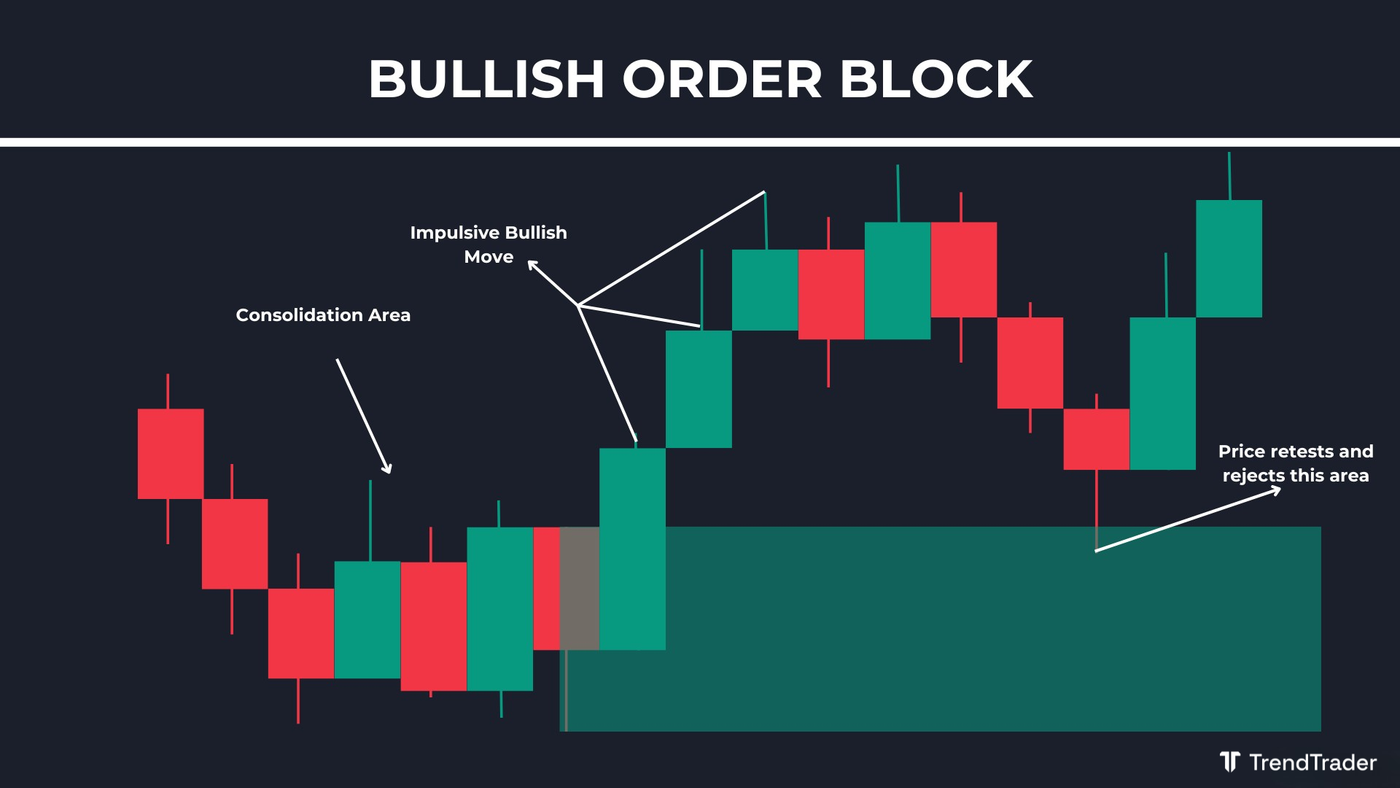
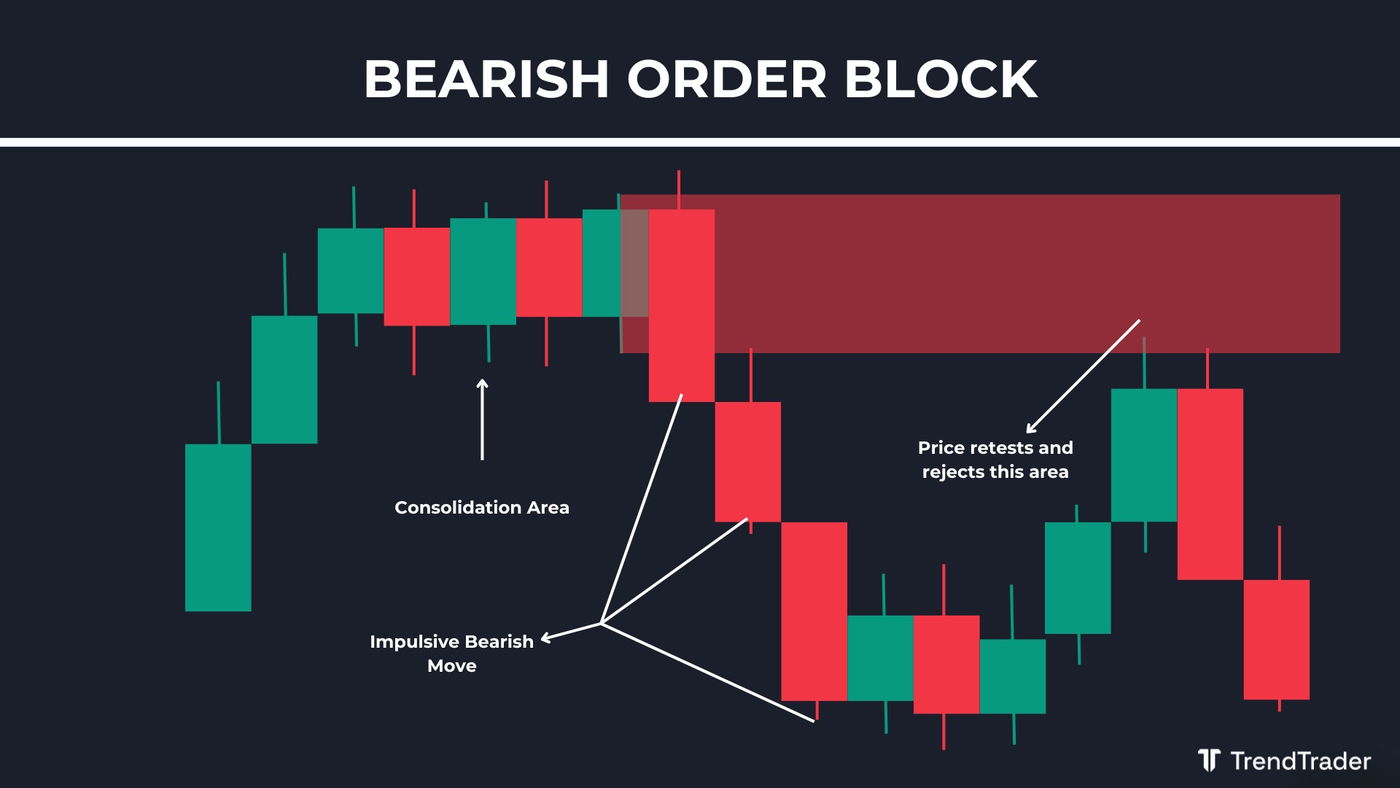
The pattern to look for is a period of consolidation followed by a sharp impulsive move. The consolidation represents a temporary balance between buyers and sellers. When one side takes control and price moves strongly in one direction, the last candle of the consolidation period before that move becomes the order block.
If the impulsive move was bullish, use the last bearish candle before the move as your order block zone. If the impulsive move was bearish, use the last bullish candle before the move as your order block zone.
How to Find a Bullish Order Block
Look for a consolidation period on your chart followed by a strong bullish move. Find the last bearish candle before that move began. Draw your zone from the low of that candle to the high. That range is your bullish order block. Look for long entries when price retests it from above.
How to Find a Bearish Order Block
Look for a consolidation period followed by a strong bearish move. Find the last bullish candle before that move began. Draw your zone from the high of that candle to the low. That range is your bearish order block. Look for short entries when price retests it from below.
Trading Using Order Blocks
Order blocks mark areas where institutional orders are likely still sitting. Trade with them, not against them.
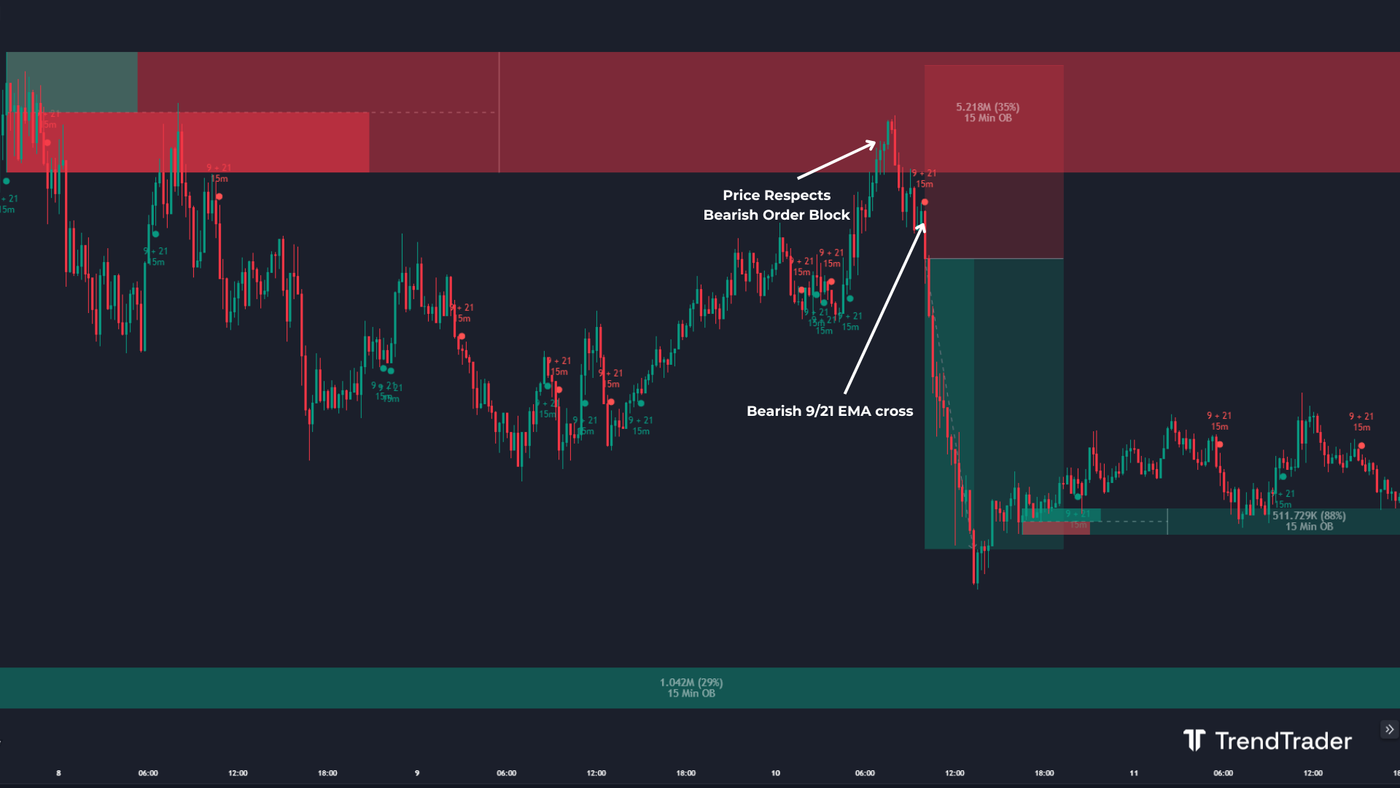
When price retests a bullish order block, look only for long entries. When price retests a bearish order block, look only for short entries. A retest alone is not enough: you need additional confluence to pull the trigger.
In the example below, price retraces into a bearish order block, respects the zone, and confirms with a bearish EMA crossover. The crossover provides confluence that the trend is continuing. A short entry with a stop loss above the order block and a 1:1.5 risk-to-reward target is a reasonable setup.
The key principle: use the order block as your location, and use confluence to time your entry.
How Do I Identify Strong Order Blocks?
Not all order blocks are equally valid. The strongest ones share common traits.
Sharp impulse away from the zone: a slow grinding move is less convincing than a fast decisive break. The sharper the move, the more significant the orders at that level. First retest: a zone revisited multiple times has likely had its orders filled. Higher timeframe confluence: an order block on the daily or four-hour chart has more participants watching it than one on the five-minute. Confirmation signal at the zone: an EMA crossover, liquidity grab, or market structure shift adds confidence before entering.
A retest alone is not a trade. The order block gives you the level. Confluence gives you the reason.
Which Timeframes Do Order Blocks Work Best On?
Order blocks work across all timeframes. Scalpers use them on the one-minute and five-minute charts. Day traders use the 15-minute and hourly. Swing traders look at the four-hour and daily.
Higher timeframes produce more reliable zones. A bearish order block on the daily chart carries more weight than one on the five-minute, because more market participants are aware of and reacting to it.
The most effective approach is top-down: identify the order block on a higher timeframe, then drop to a lower timeframe to time your entry with precision.
What Markets Do Order Blocks Work With?
Order blocks work in all liquid markets: stocks, crypto, forex, and futures. The concept relies on institutional order flow, so it performs best in high-volume markets where large participants are actively trading. Major indices, large-cap crypto, and major forex pairs are all suitable.
Thinly traded instruments can produce false signals because fewer institutional participants are driving the reaction.
This article is for educational purposes only and does not constitute financial advice. Trading involves significant risk of loss. Do your own research and consult a licensed financial advisor before making any trading decisions.
Browse more trading concept guides on the TrendTrader blog.
